断片と断片でないもの
断片と断片でないもの/ Fragments and What is Not a Fragment
2026
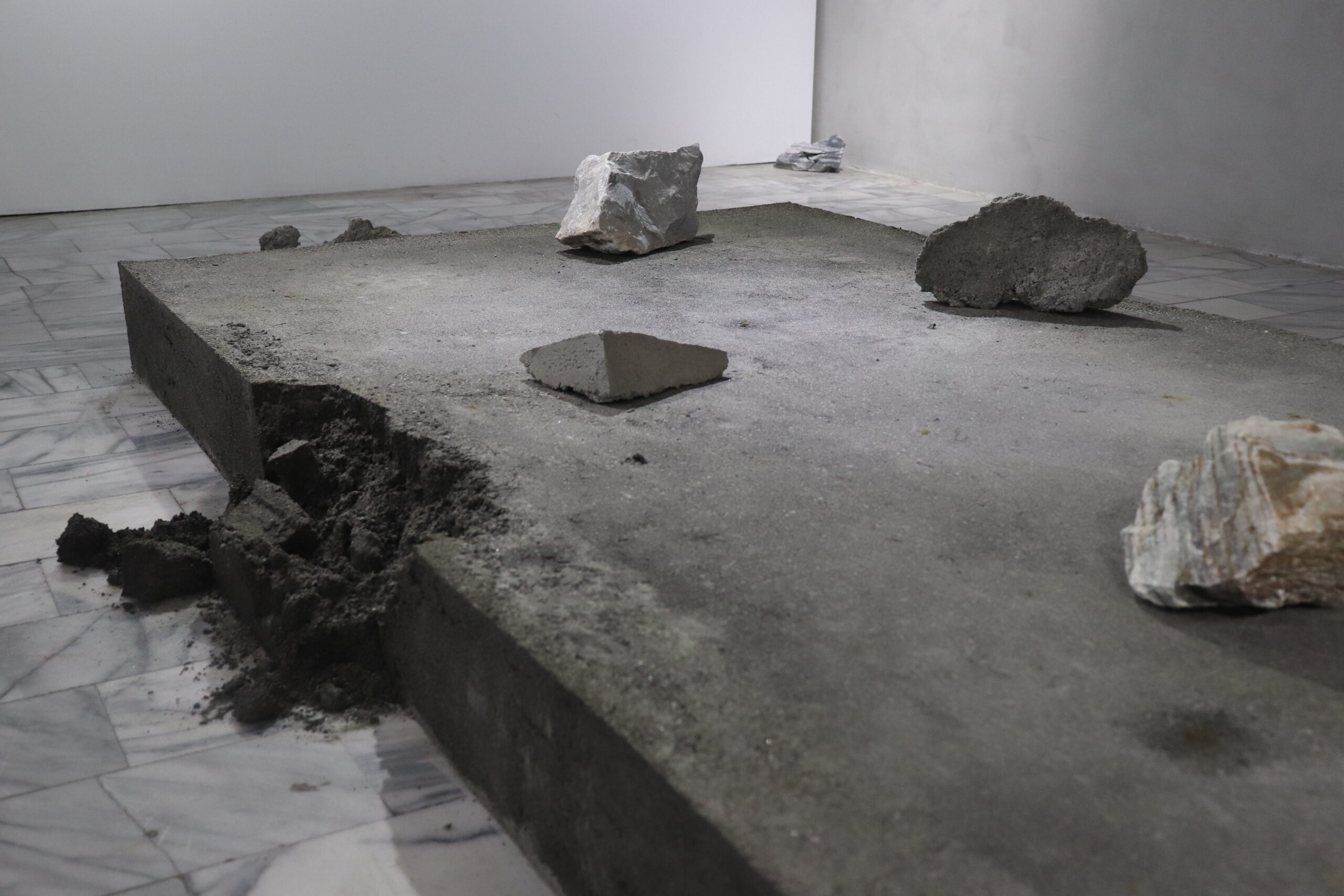
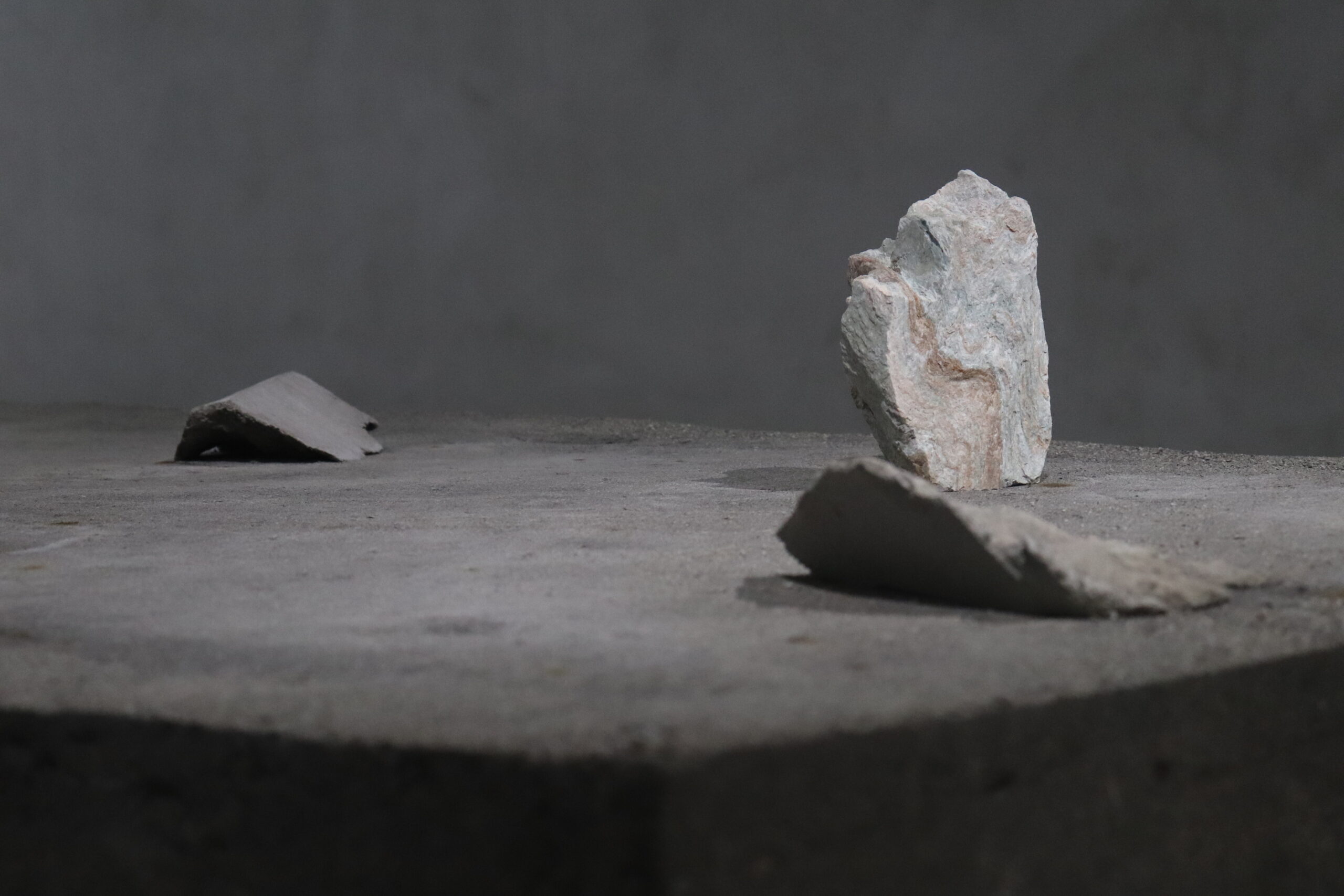
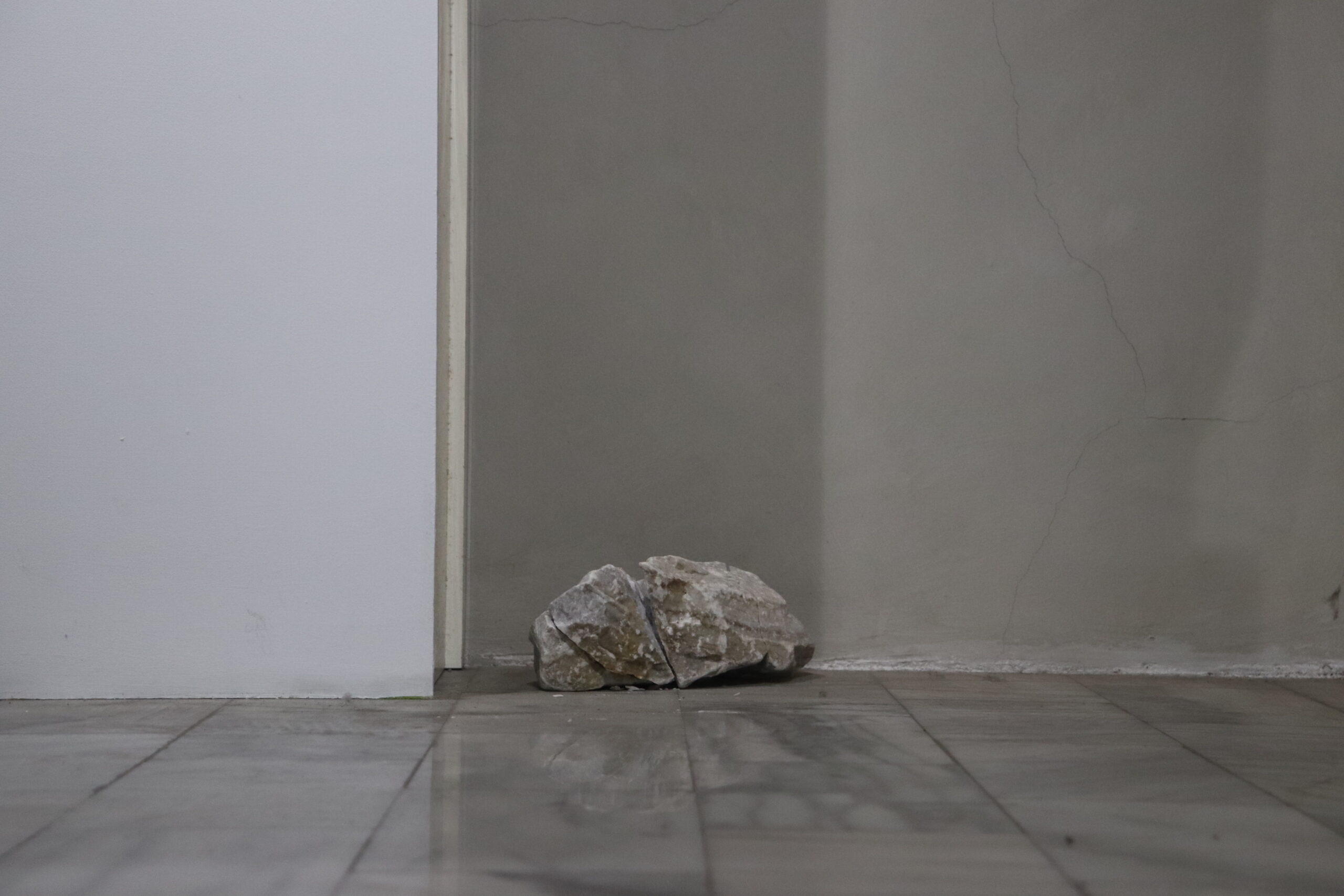
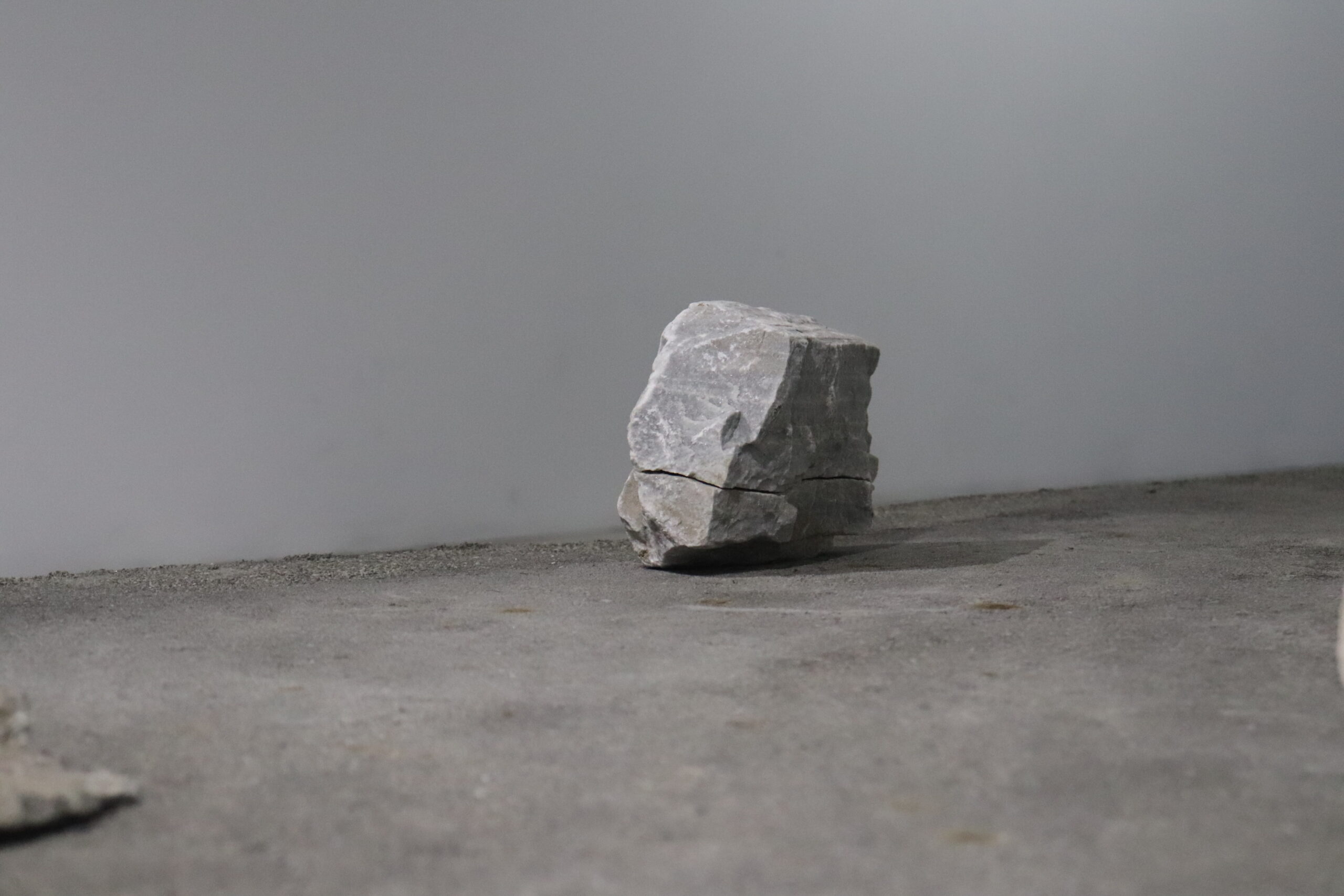
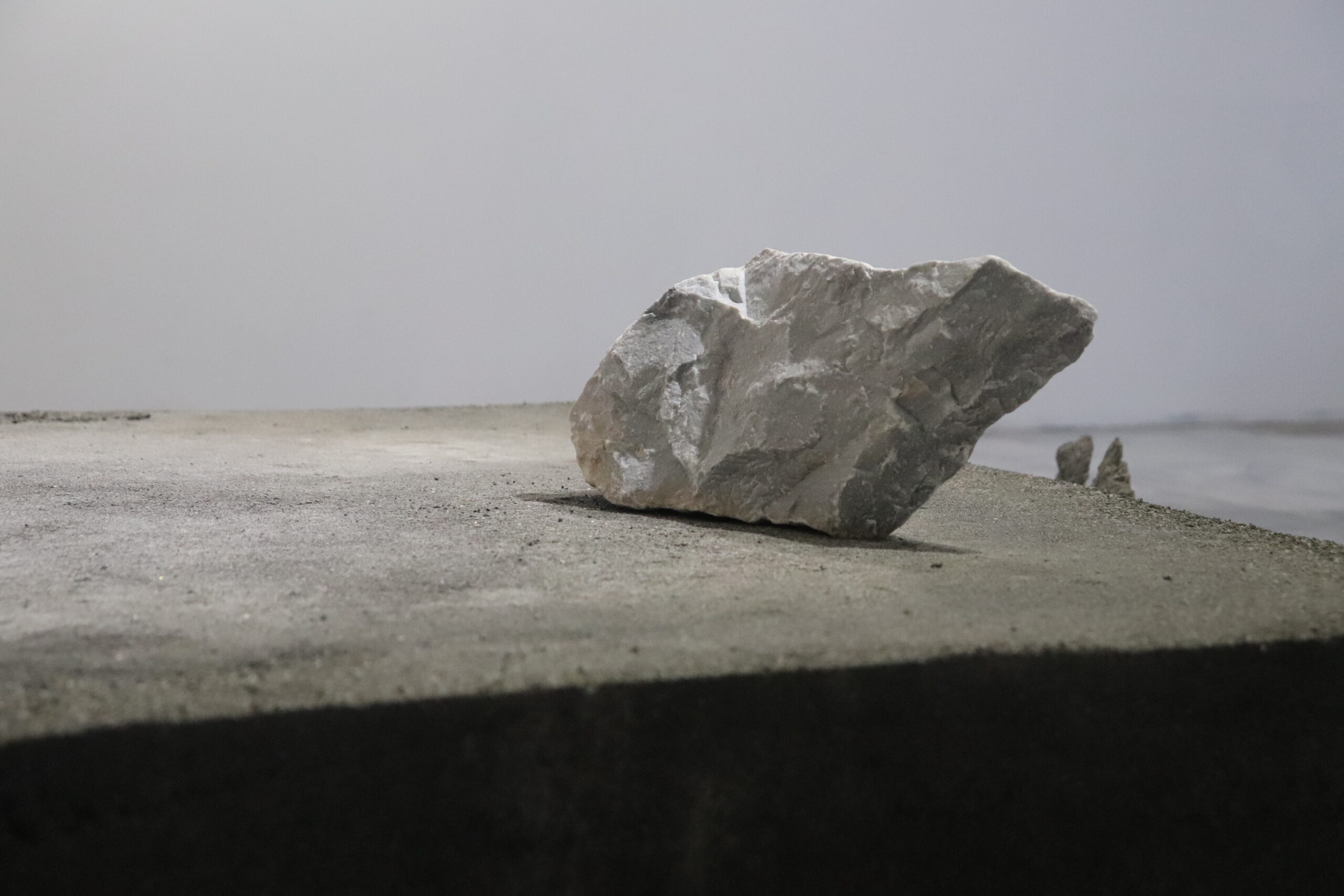
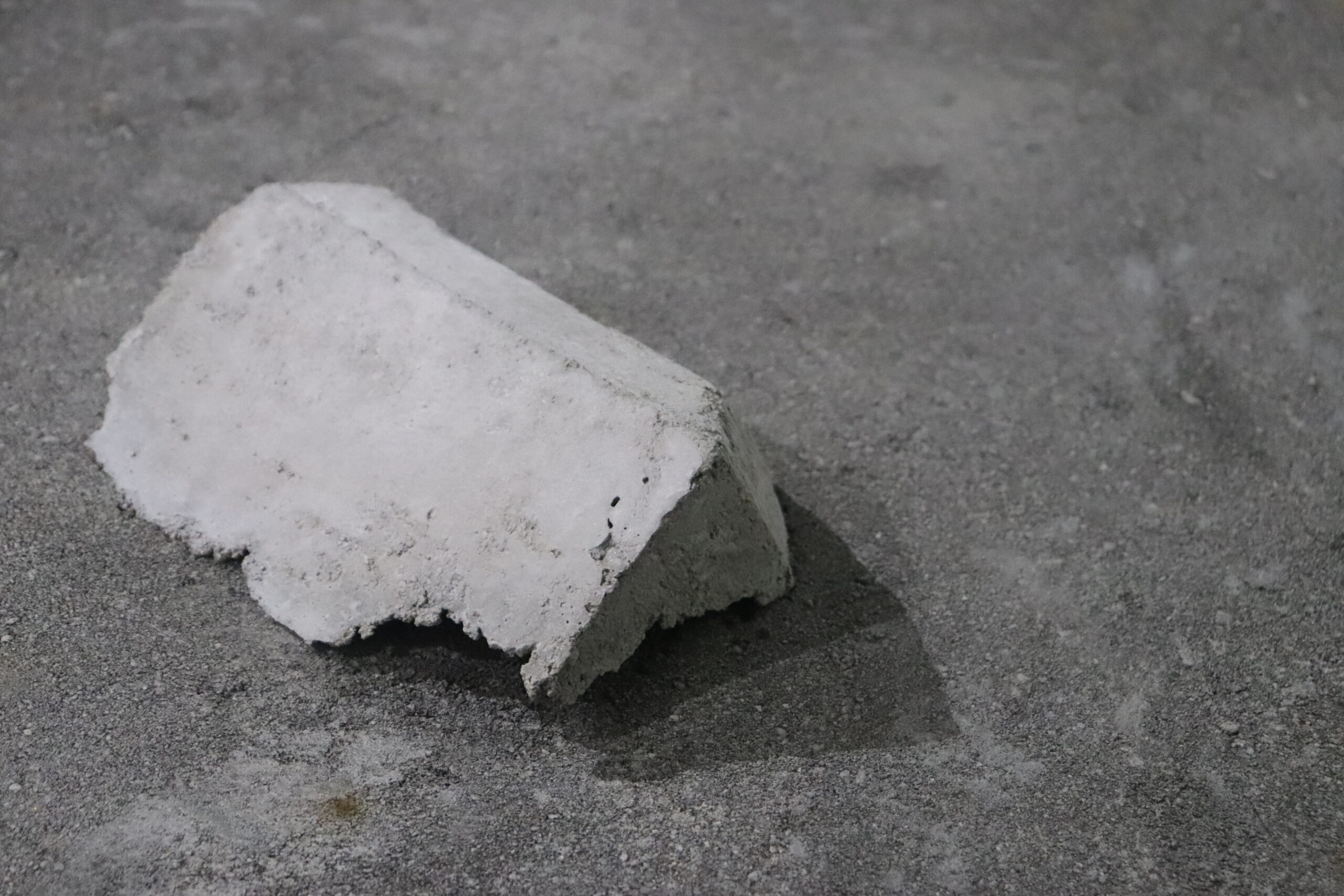
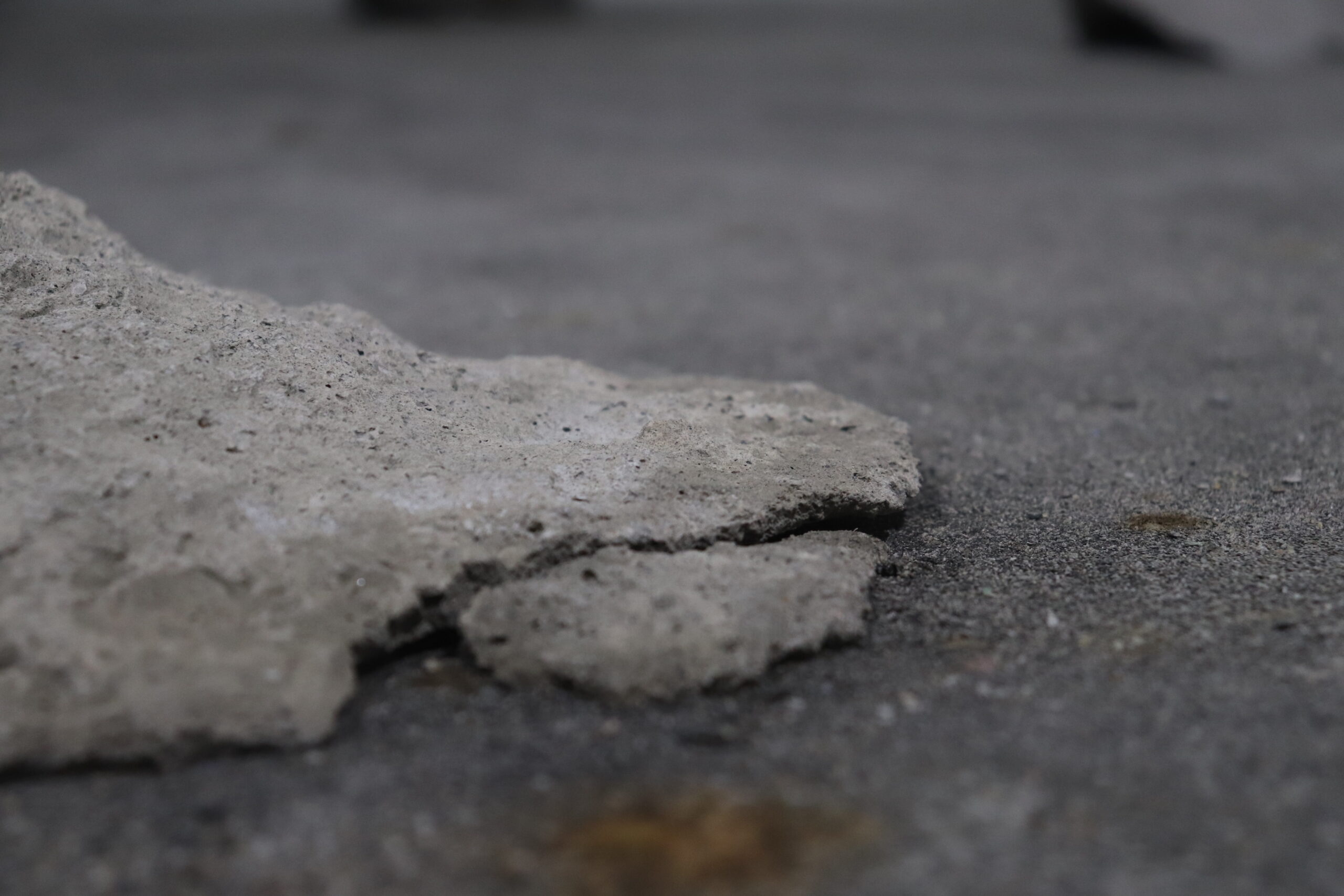
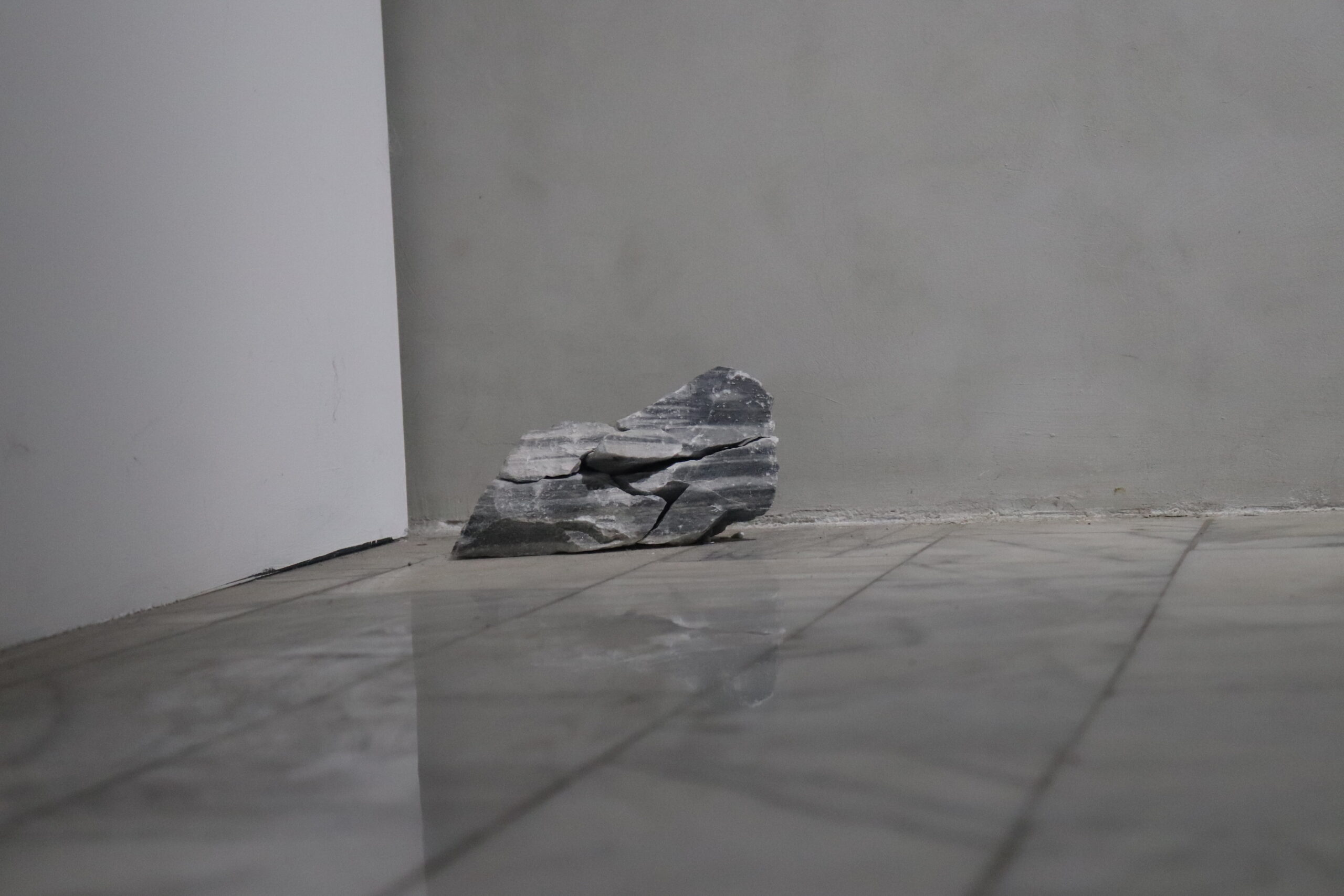
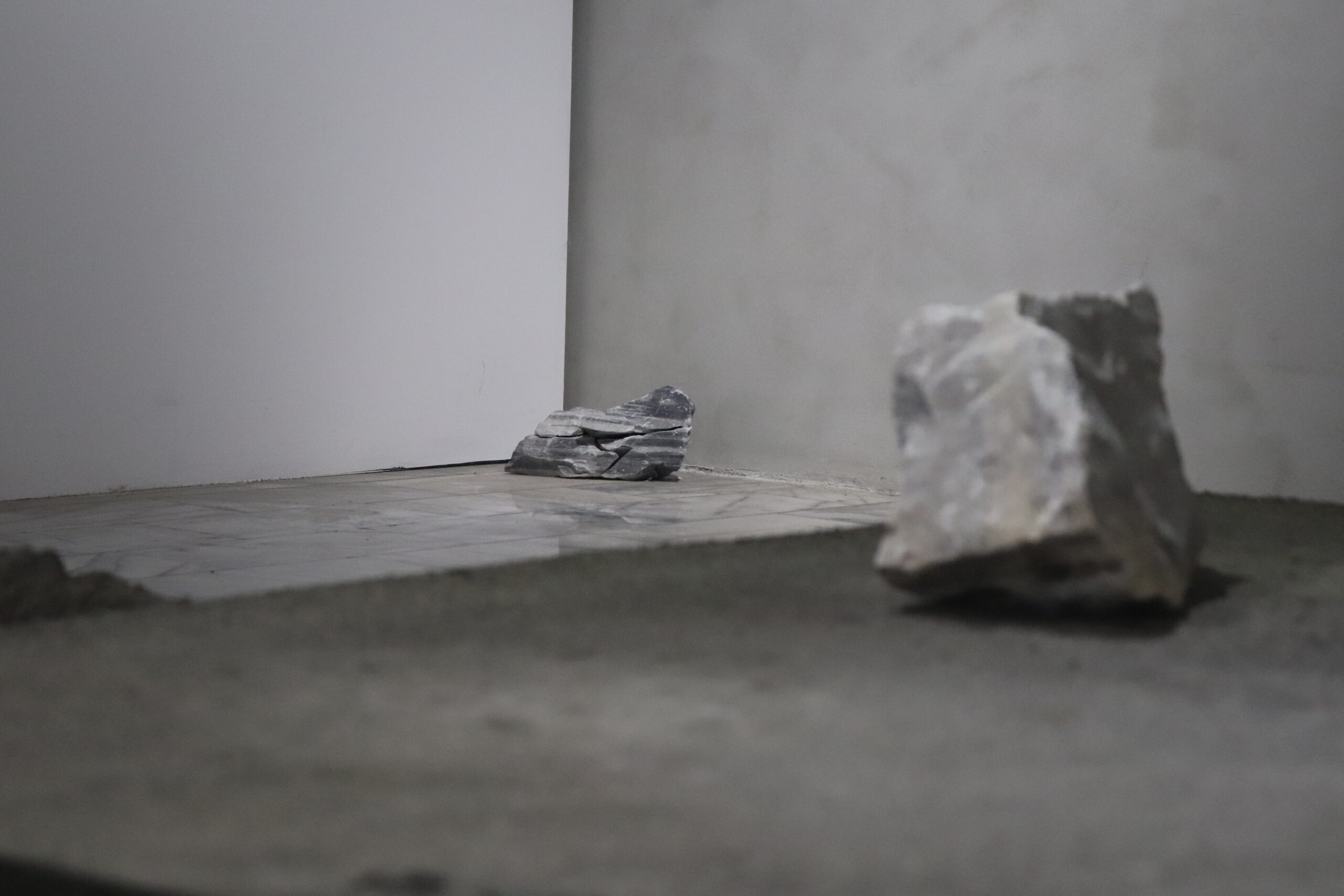
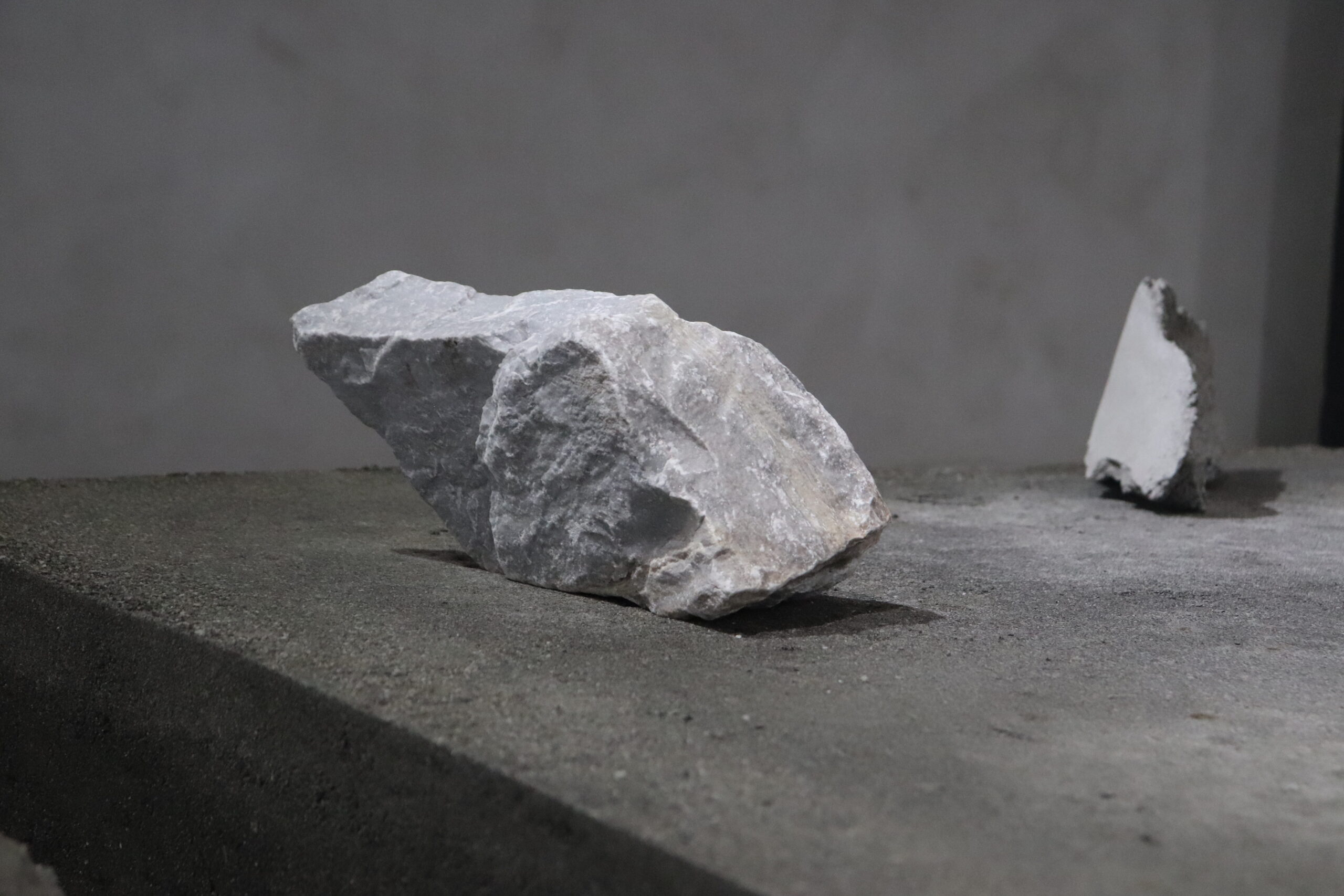
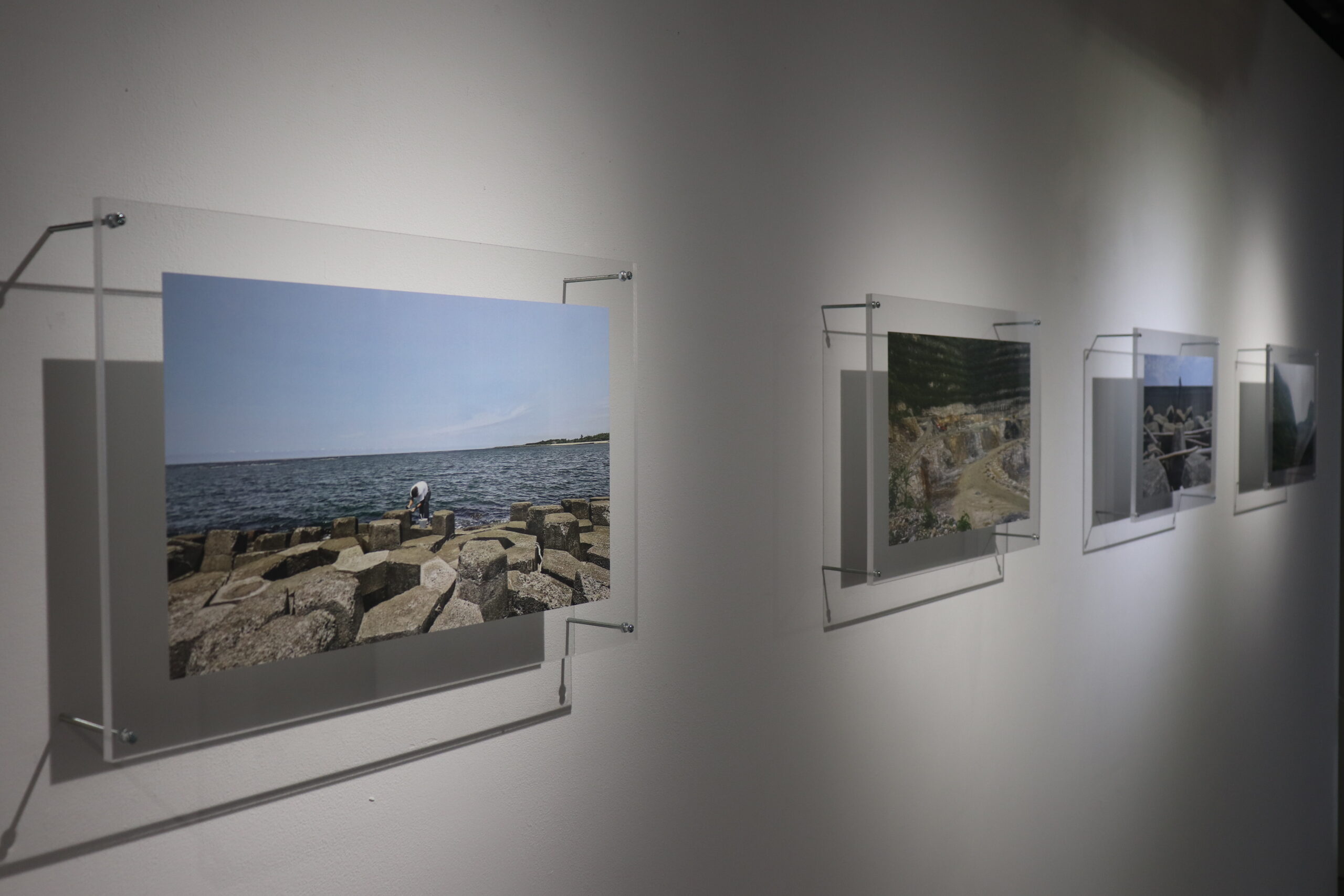
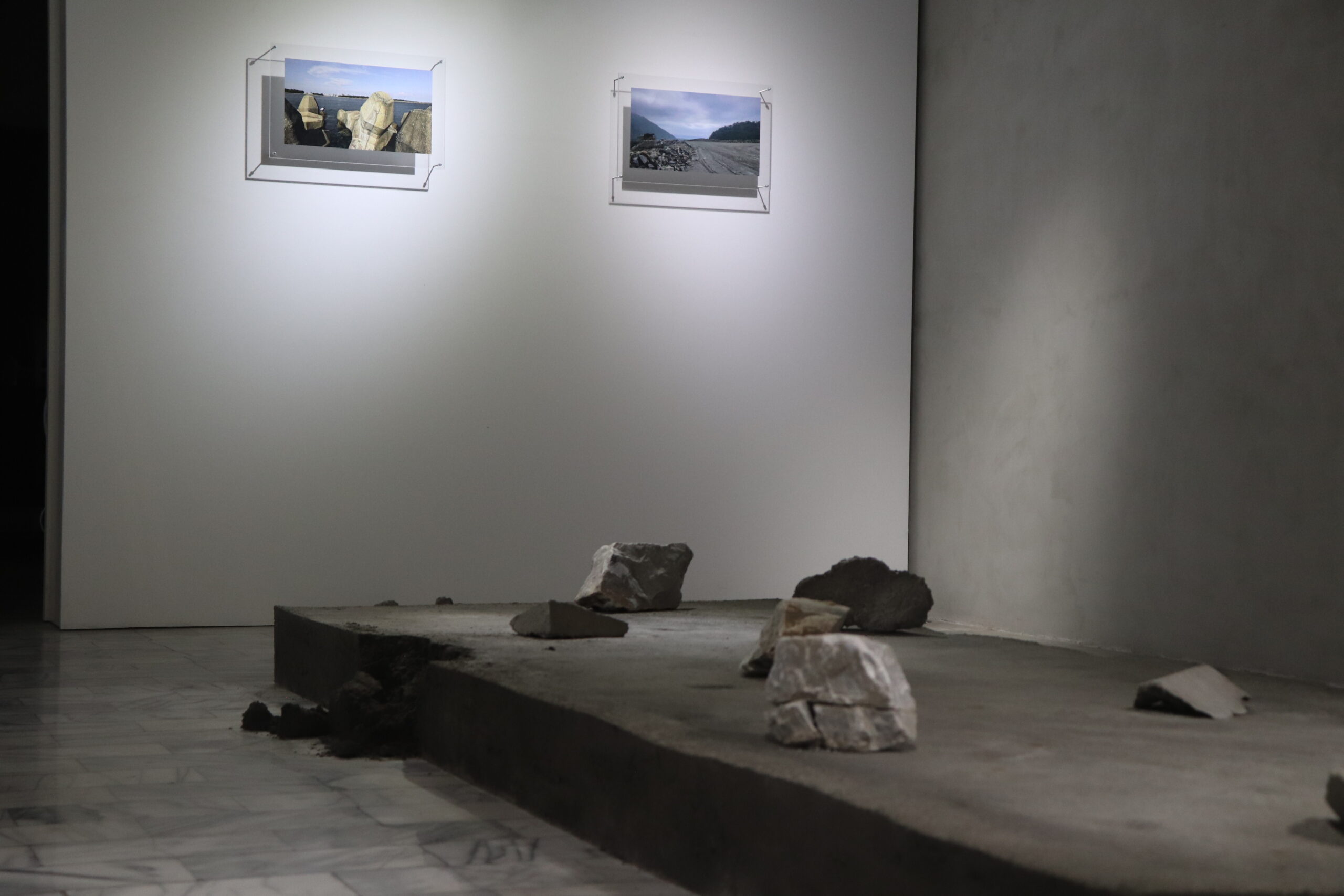
「Vast Fragment」Absolute Space
インスタレーション
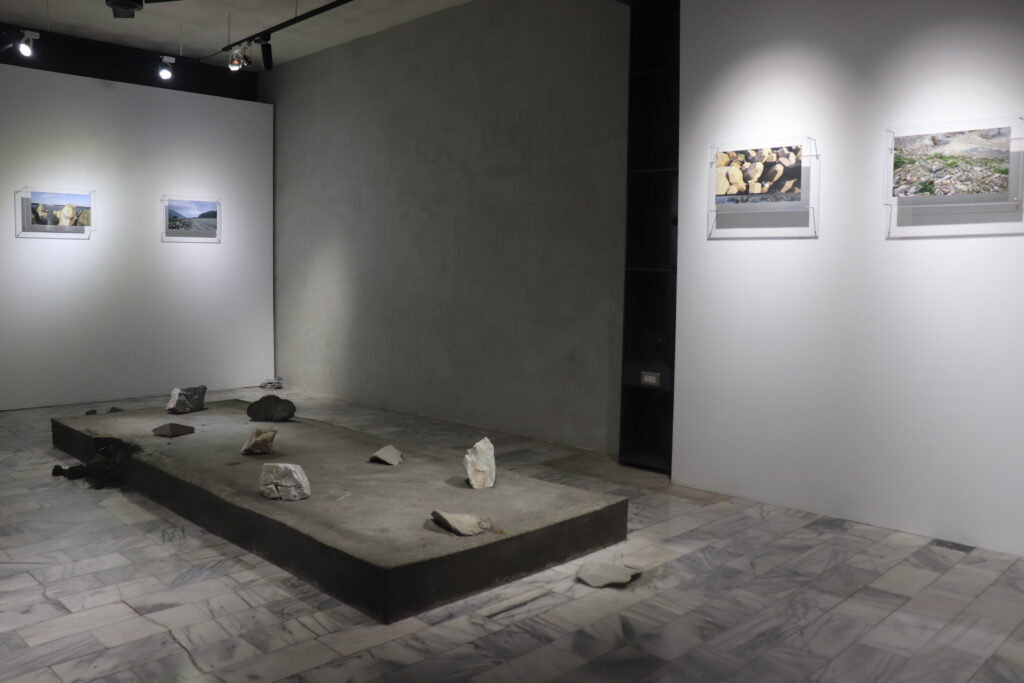
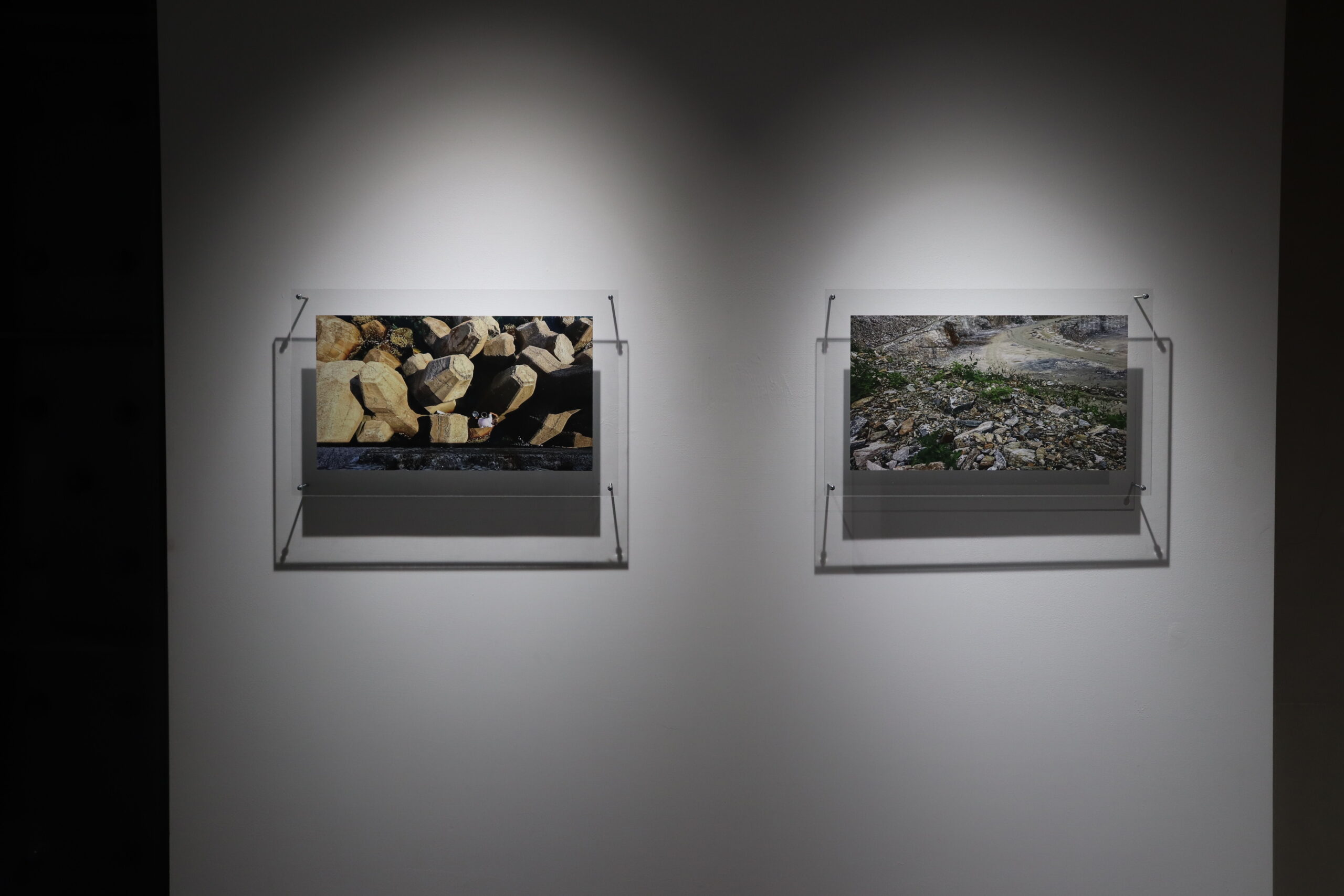
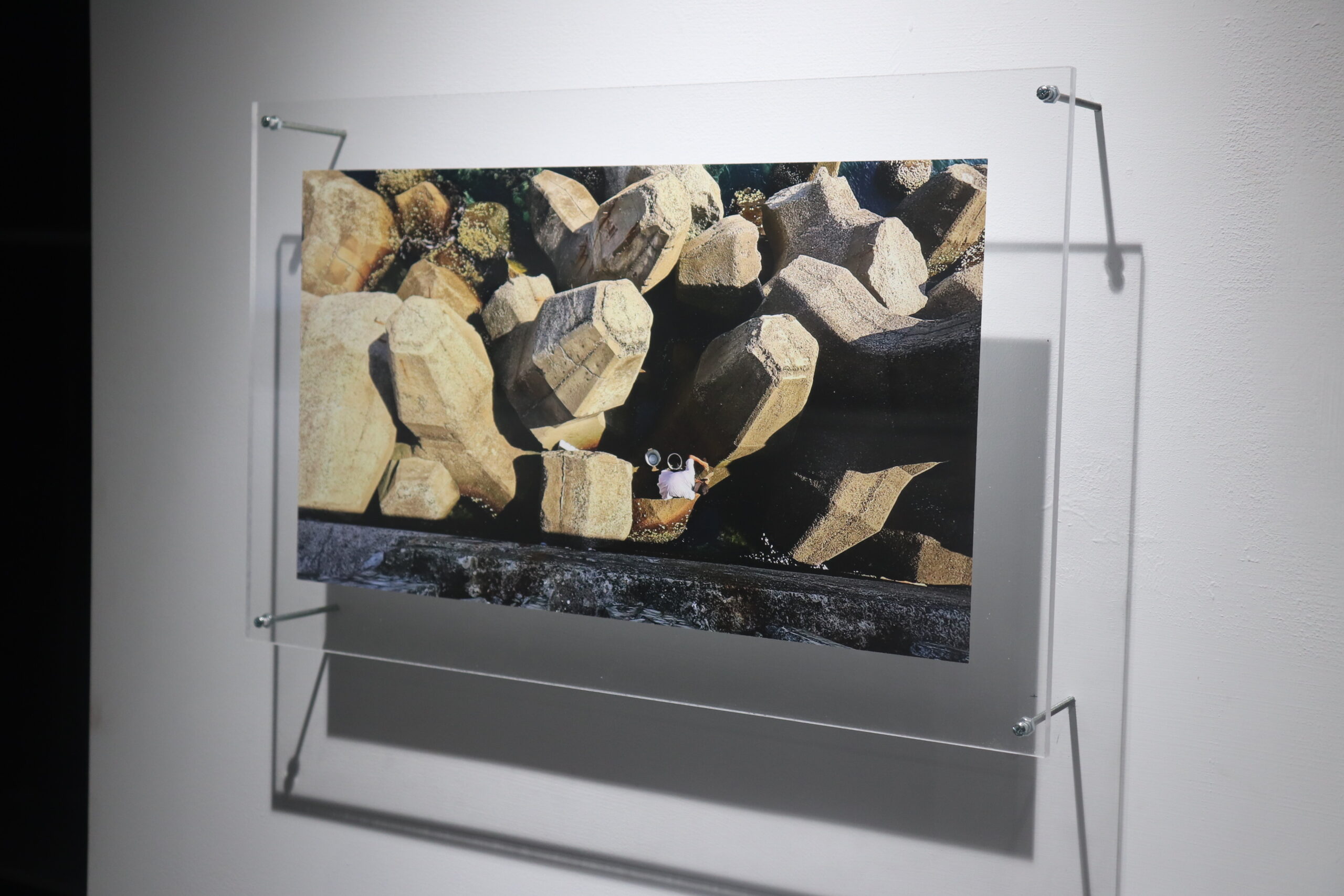
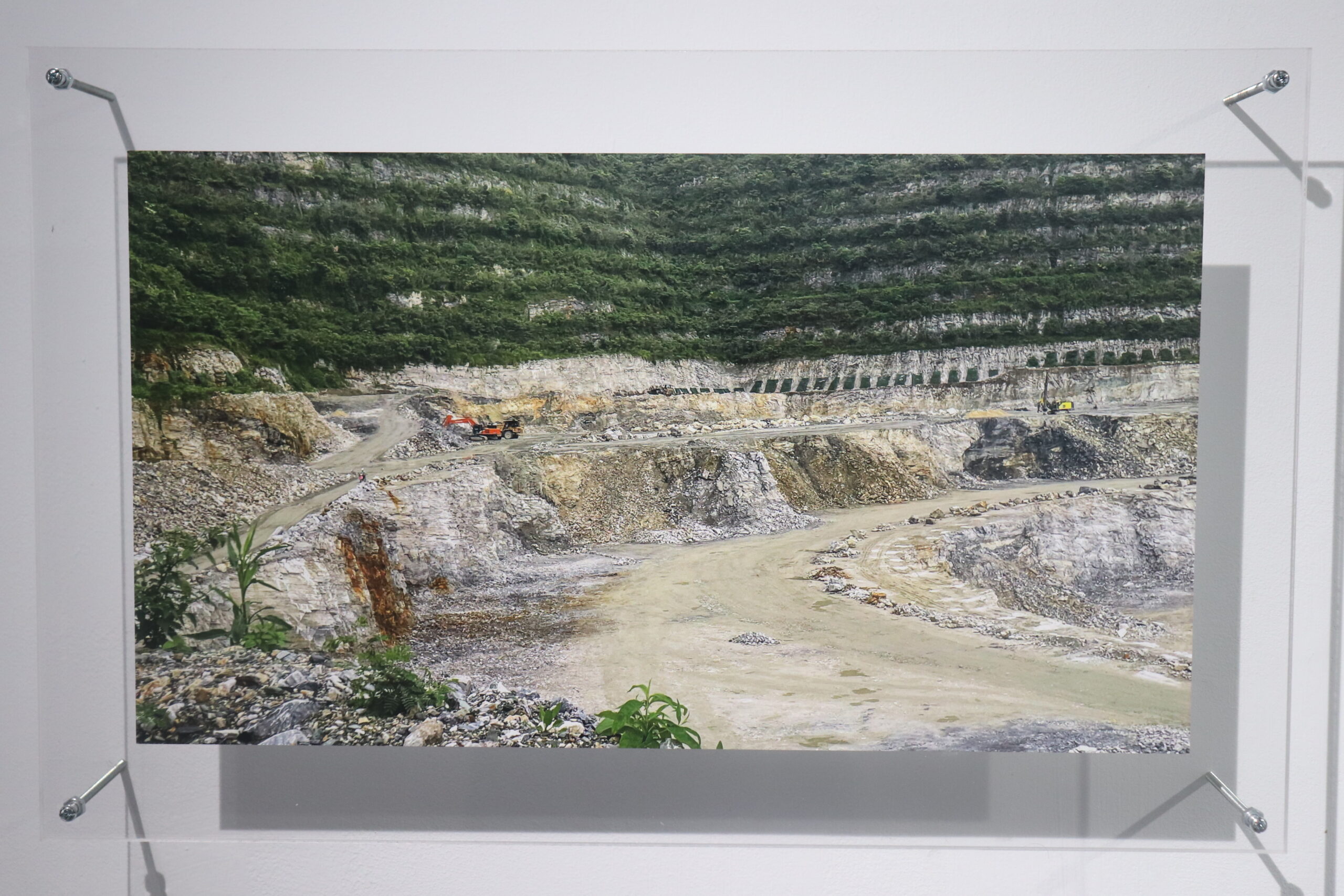
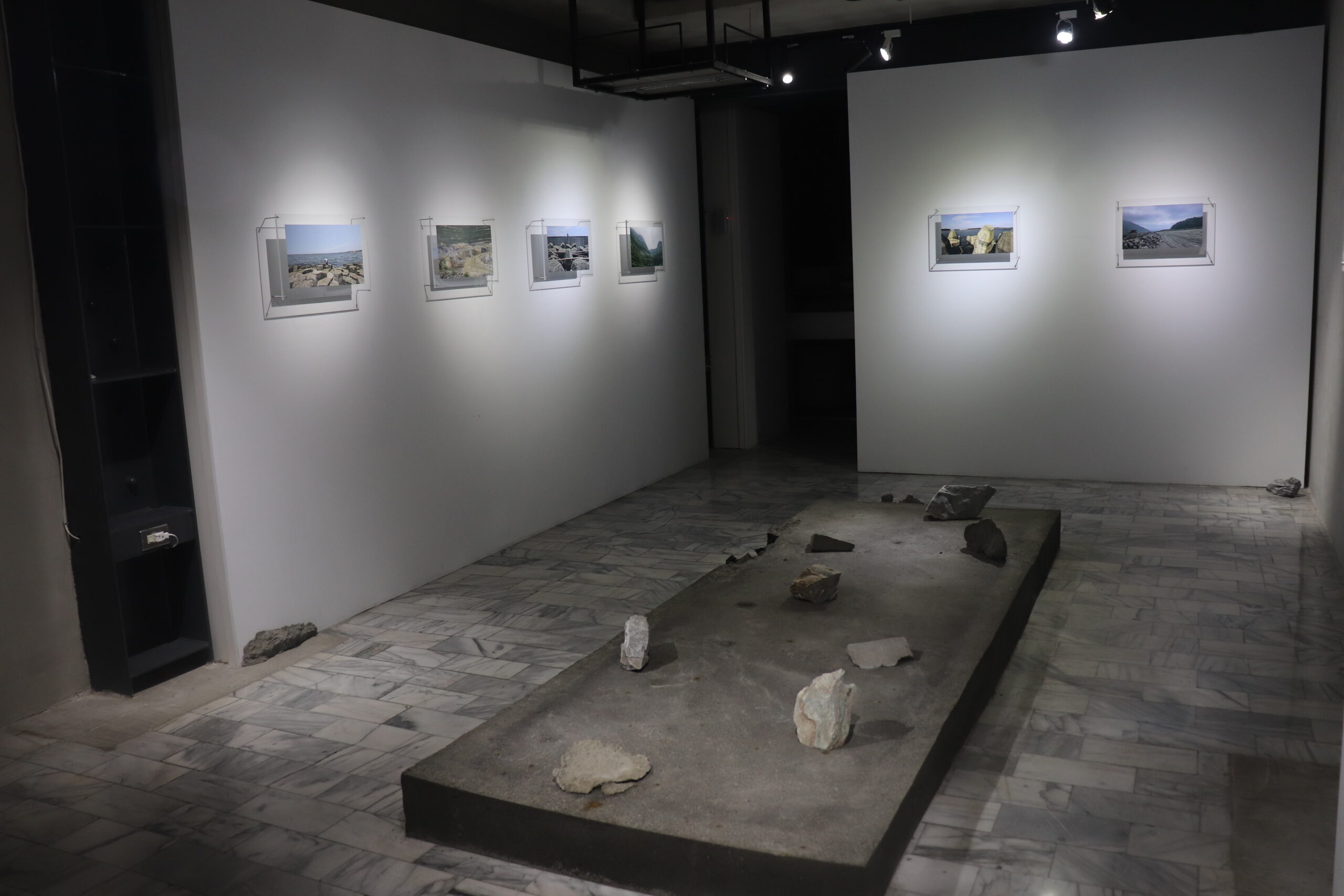
The photographs depict limestone quarries in Hualien and coastal landscapes in Tainan.
On one side are landscapes transformed through the extraction of limestone used as a raw material for cement; on the other is a record of the artist reconstructing missing sections of seawalls and wave-dissipating concrete blocks using cement.
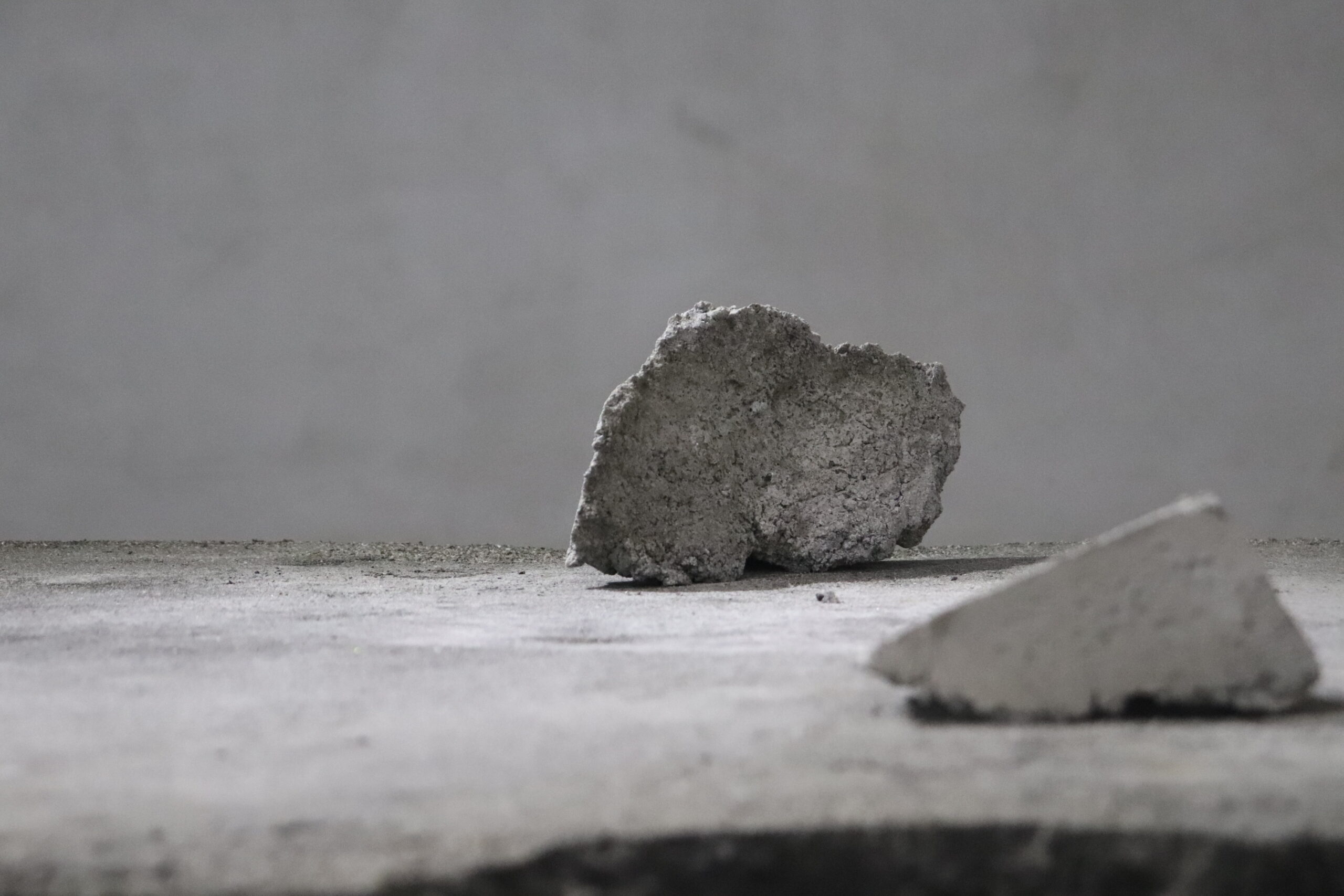
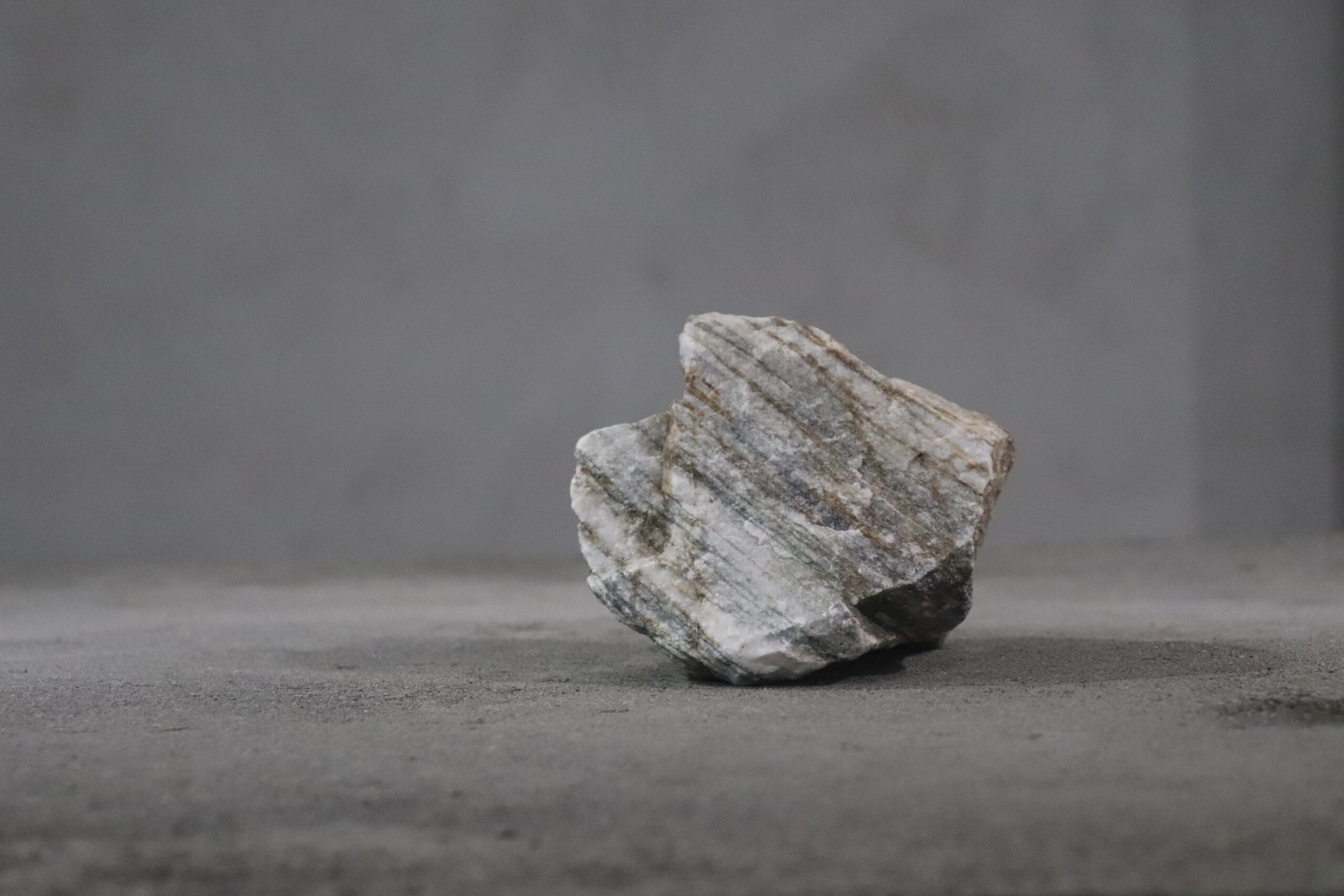
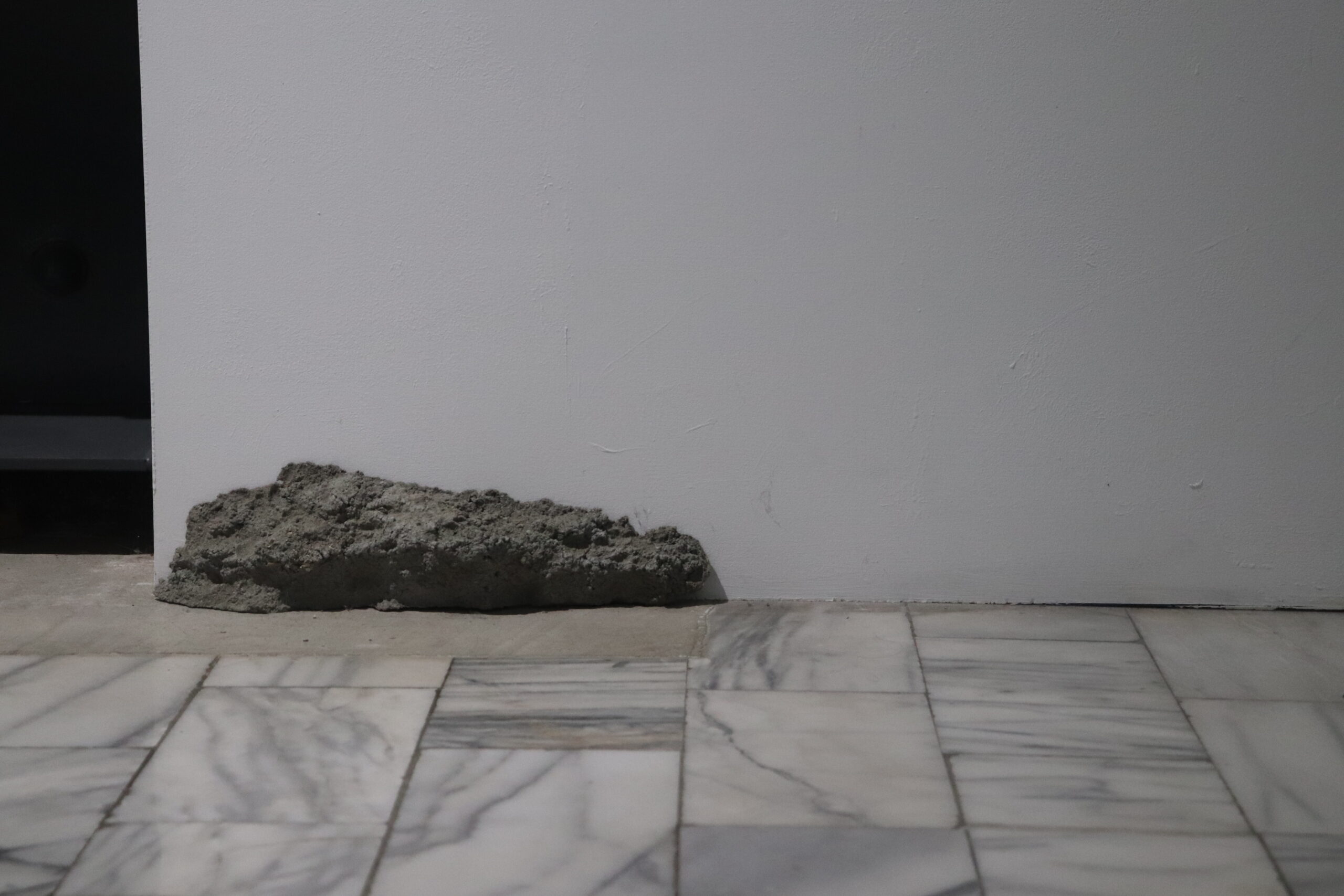
Limestone was formed over vast periods of time from matter accumulated on the ocean floor. It is quarried, crushed, and transformed into cement, eventually becoming structures. The artist hardened this cement using seawater and cast the missing fragments of the coastline’s concrete structures.
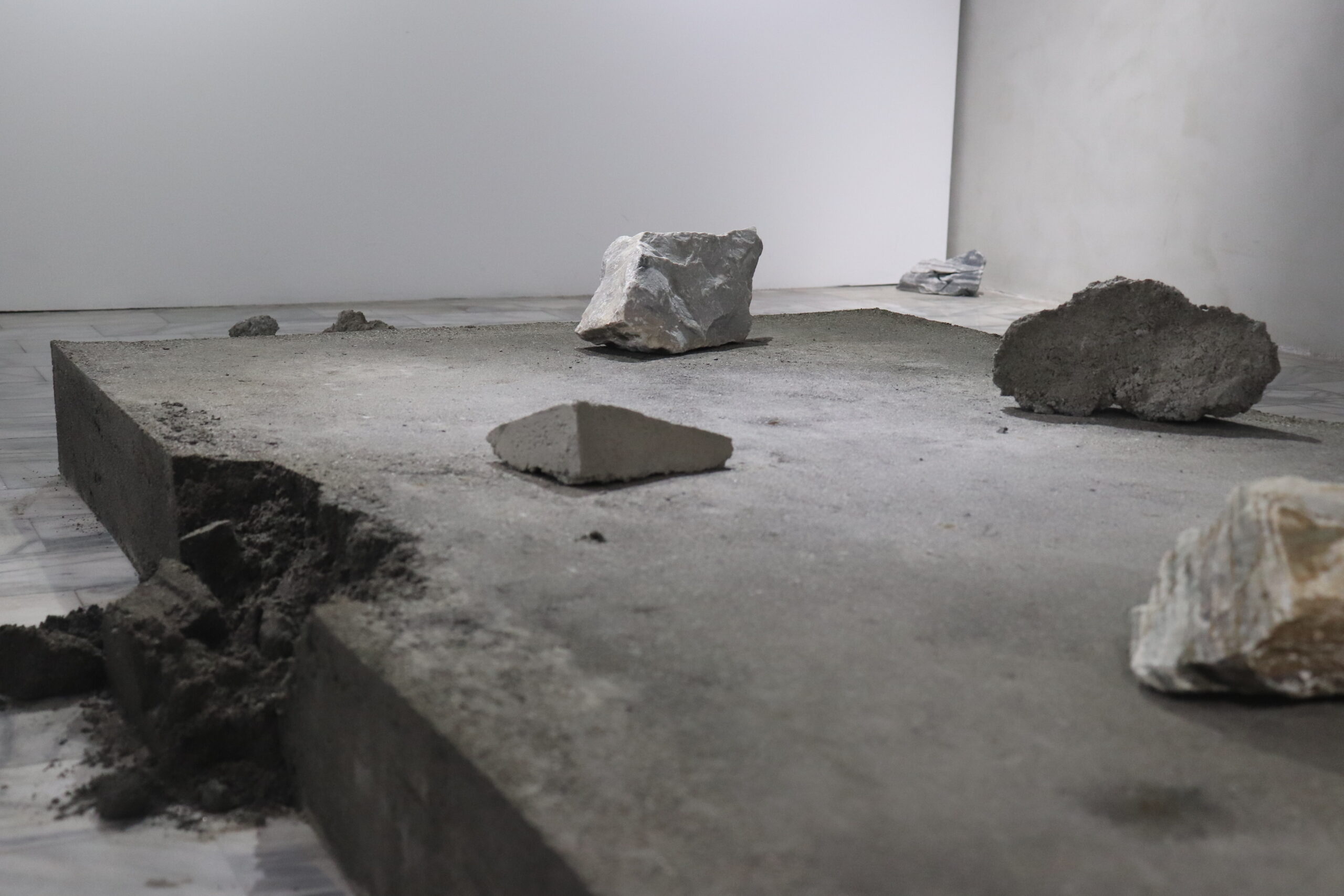
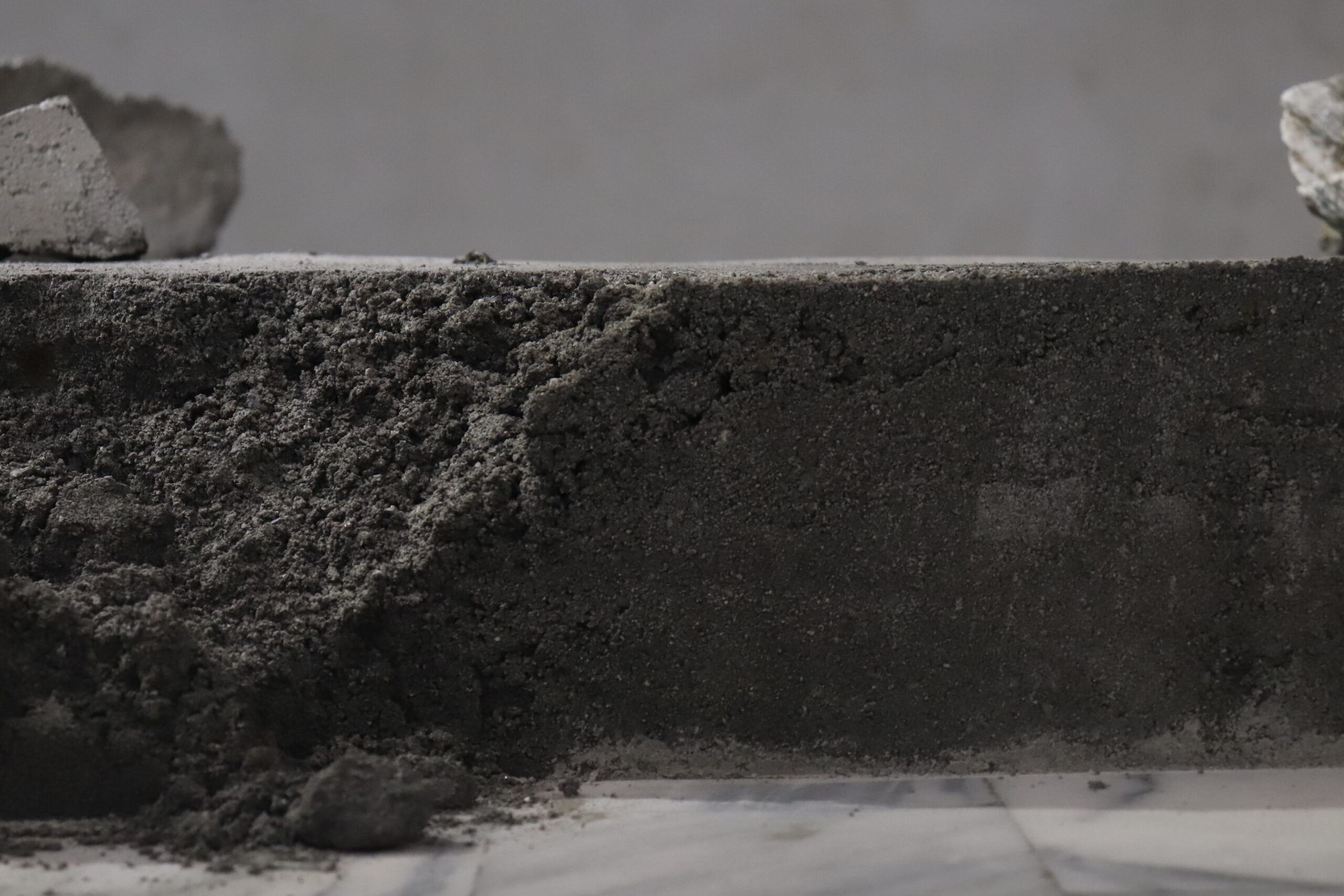
The limestone placed on the floor was collected in Hualien, while the cement objects were produced from casts taken from damaged sections of the coastline in Tainan. The display platforms supporting them are constructed from compressed soil commonly used as a building material. Over the course of the exhibition, the soil gradually erodes and collapses, causing the exhibition space itself to continuously change.
Artificial structures are also eroded within the timescale of nature, while nature itself is continually reshaped through human intervention. This work attempts to capture landscapes that are constantly transformed through extraction, construction, erosion, and collapse.
展示せれた写真は花蓮の石灰石採掘場と台南の海岸線を写したものである。
一方では、セメントの原料となる石灰石を採掘することで変化していく風景があり、もう一方では、堤防や消波ブロックの欠けた部分をセメントによって再形成する行為の記録である。
石灰石は、かつて海底に堆積した物質が長い時間をかけて形成されたものであり、それは採掘され、粉砕され、セメントとして構造物へと姿を変える。作家はそのセメントを海水によって硬化させ、海岸の欠損部分を型取った。
床に置かれた石灰石は花蓮で採取されたものであり、セメントによるオブジェクトは台南の海岸線の欠損をもとに制作されている。また、それらを支える展示台は建材として用いられる土が圧縮されて作られている。会期中、土は徐々に侵食や崩壊を起こし、展示空間そのものもまた変化し続ける。
人工物もまた自然の時間の中で侵食され、自然もまた人間によって更新される。本作は、採掘、構築、侵食、崩壊によって絶えず変化する風景を捉える試みである。